

🥇 2026 Best Overall: Kask Bambino Pro
Best Triathlon Aero Helmets for 2026 — Tested & Ranked
We analyzed 10 triathlon aero helmets. Only 5 are actually worth racing in.
The bike leg is the longest split in triathlon, and it’s the one where a helmet choice actually shows up on the clock. We dug into independent wind-tunnel data, lab safety ratings, and hands-on reviewer testing — including our own — across 10 of the most talked-about triathlon aero helmets on the market to work out which ones earn their price tag and which are just marketing.
Quick Picks
| Award | Product | Best For | Price | Rating |
|---|---|---|---|---|
| 🥇 Best Overall | Kask Bambino Pro | All-round, sprint to long-course | £229–£299 | 4.7/5 |
| 💰 Best Value | Van Rysel XCR TT | Budget-conscious, real closed-back TT lid | £50–£80 | 4.4/5 |
| ⚡ Best for Speed | Giro Aerohead II MIPS | Experienced time-trialists | £477.87 | 4.6/5 |
| 🏊 Best for Beginners | MET Manta MIPS | First-time aero-helmet buyers | £141.99 | 4.5/5 |
| 🔥 Editor’s Pick | POC Procen Air | One helmet for road, TT bike & heat | £254.99 | 4.6/5 |
What to Look For
- Closed-back TT shape vs. road-aero shape: True closed-back time trial helmets deliver the biggest aero gains on flat, fast courses — but only if you hold a stable, consistent aero position all day. Road-aero-style helmets trade a little outright speed for far better airflow and a more forgiving fit.
- Ventilation vs. outright aero: The fastest shapes tend to run hottest — testers have flagged even premium helmets getting clammy on slow, hot climbs.
- Fit and head-shape compatibility: Varies wildly between models, so don’t assume a flagship helmet will fit you better than a budget one.
- Transition speed: Some magnetic visor systems are rock-solid on the bike but fiddly to grab and clip in T1.
- Independent safety ratings: Look for Virginia Tech STAR, MIPS, or WG11 — not every aero helmet in this category includes one.
- Visor/lens versatility: Useful for changing race-day light, but adds cost and weight versus a visor-free design.
- Weight: Every gram matters over an Ironman bike leg — lighter isn’t automatically better if it costs you aero performance.
Full Reviews
Kask Bambino Pro
“The only helmet on this list versatile enough to take you from a sprint-distance dash to a full-distance grind without a single compromise.”
Why #1 Wins
- Race-distance-agnostic. In our hands-on review, we called it “versatile” enough for everything from sprint triathlon to distances beyond 40km — most aero helmets specialise in one or the other.
- Visor security that actually holds up. The redesigned magnetically-attached visor uses recessed magnets we found you’d “have to hit it pretty hard to dislodge” — no rattling loose at 40kph.
- Built-in ventilation architecture. Six front air slits, four rear slits, and roof channels mean it doesn’t sacrifice everything for aero, unlike some closed-back competitors.
- Adjustable, dial-in fit. A rear-dial retention system plus leather chin-strap gives it a more customisable fit than most helmets in this price bracket.
What we found: Our hands-on testing rated it a Grade B overall, with the aero tail shape performing consistently across varying head positions — a key differentiator from single-purpose TT helmets that only work in one aggressive position. Full review: Kask Bambino Pro tested.
The Good
- 352g weight keeps it competitive despite the added ventilation
- Secure visor attachment tested to hold under impact-level force
- Rear-dial + leather chin-strap adjustment for a properly dialled-in fit
Worth Knowing
- Visor is prone to steaming up in wet-hair conditions post-swim, and can be fiddly to fit quickly mid-transition
- Premium pricing — we noted it carries a “sky high” price tag versus budget alternatives
Van Rysel XCR TT
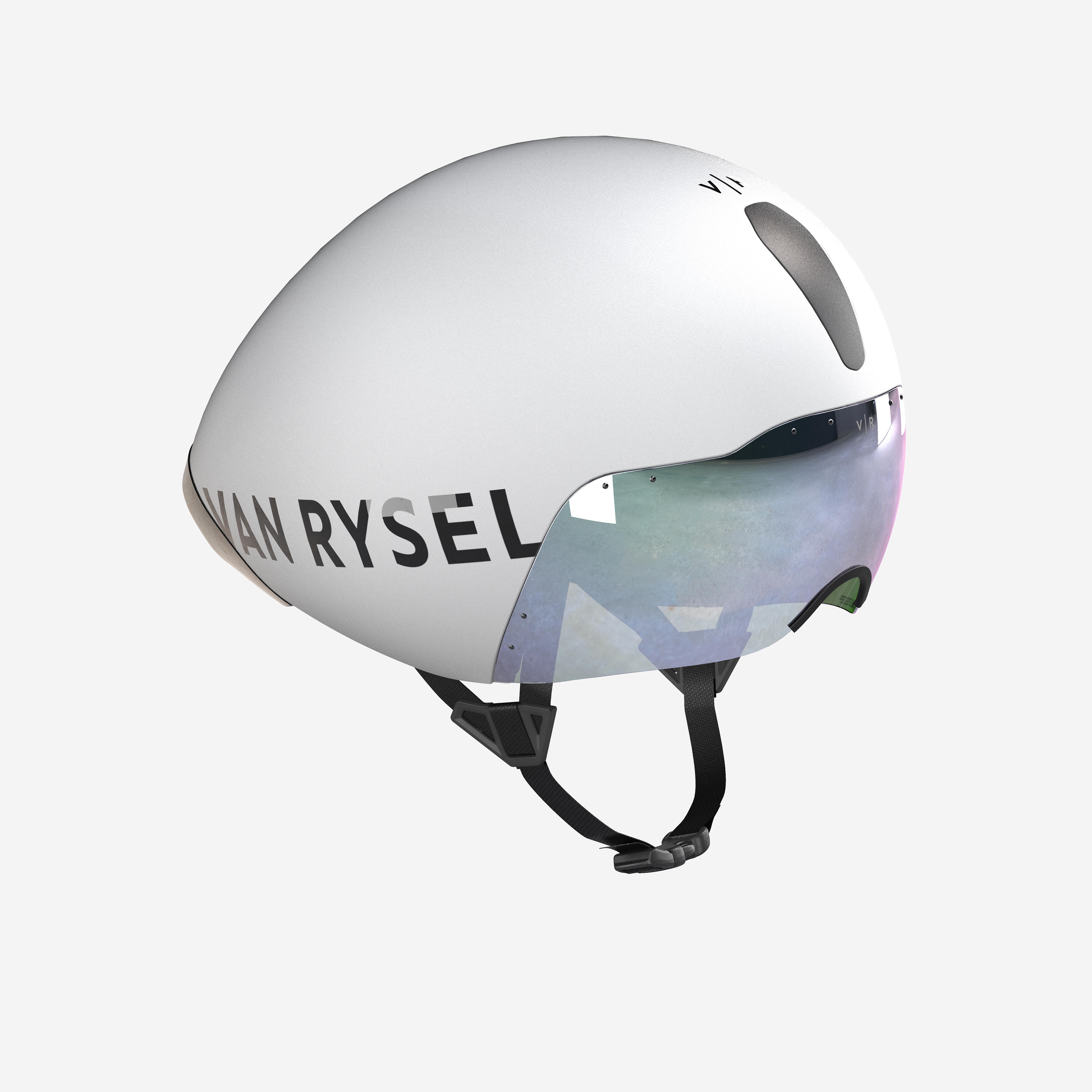
“A genuine closed-back TT helmet — not a compromise aero-road helmet in disguise — at a fraction of flagship pricing.”
What we found: The Triathlete’s roundup of sub-£200 options singles this out as “surprisingly competitive against helmets at twice the price” in independent wind-tunnel testing, which is a rare claim for a helmet at this price point.
The Good
- Genuine closed-back TT shape, not a hybrid compromise
- Independently wind-tunnel validated, not just marketing claims
- Sold through Decathlon’s retail network for easy availability
Worth Knowing
- Reviewers note it “suits fewer head shapes than pricier options” — try before you commit if possible
- No MIPS or rotational-impact system listed

Giro Aerohead II MIPS
“Built for one job — maximum aero speed on a flat, fast course — and reviewers consistently rate it the sharpest tool for that job.”
What we found: Category testing describes it as Giro’s “most aerodynamic helmet ever,” built around an integrated Zeiss-lens shield with a “form follows function” design philosophy, and it’s specifically rated “Best for Experienced Time-Trialists” in comparison testing rather than a general all-rounder pick.
The Good
- Long-tail closed-back shape purpose-built for outright aero numbers
- MIPS Air Node rotational-impact protection included
- Integrated Zeiss-lens shield for clear optics at speed
Worth Knowing
- At 450g, the heaviest helmet on this list, with a long tail that rewards a very stable, aggressive position
- Premium pricing puts it out of reach for most age-group budgets
MET Manta MIPS
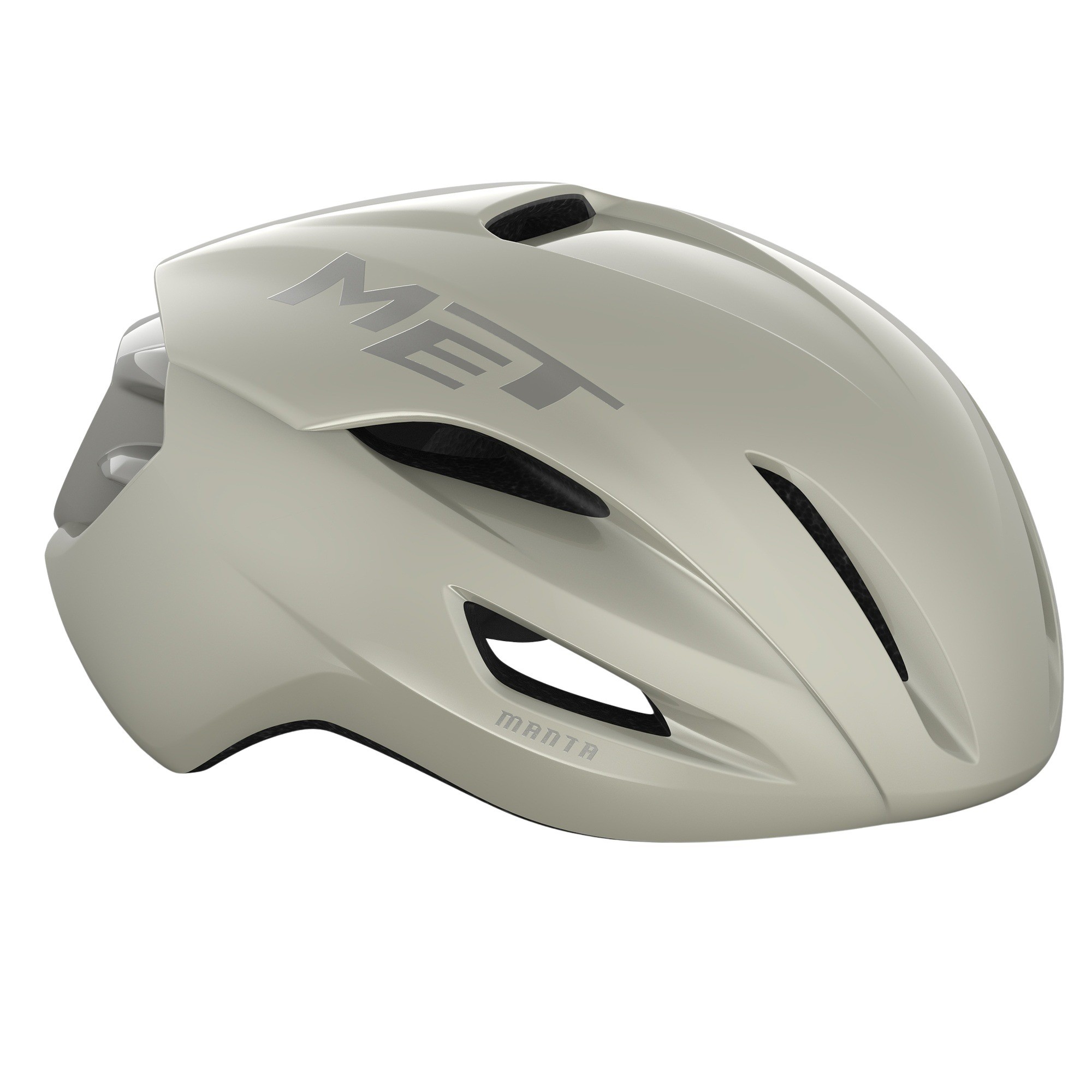
“The easiest on-ramp into aero-helmet performance — light, comfortable, and independently proven quick without a flagship price tag.”
What we found: Independent wind-tunnel testing found it 9–32 seconds faster than a baseline helmet across tested speeds, while reviewers describe it as “comfortable, well fitting and aerodynamic without being stuffy” — a rare combination for a first aero helmet.
The Good
- At 251g, one of the lightest helmets in this entire roundup
- MIPS rotational-impact protection with a 4-star Virginia Tech rating
- Magnetic buckle specifically flagged by reviewers as “tri-friendly” for fast transitions
Worth Knowing
- Semi-aero shape means it won’t match a closed-back TT helmet’s outright numbers on a pure flat course
- Not the pick if you’re chasing every last aero watt over comfort

POC Procen Air
“The rare helmet that actually works on both your road bike and your TT bike — one purchase instead of two.”
What we found: BikeRadar’s review — of a helmet raced by WorldTour rider Ben Healy — found “better than expected ventilation” alongside genuine aero credentials, calling out its “wind-tunnel proven performance” as a standout in a category where hybrid designs usually compromise too much.
The Good
- Built-in magnetic visor system with two included lenses (Cat. 2 tinted + Cat. 0 clear)
- Venturi-effect-inspired airflow zones outperform expectations for a helmet this aero
- Genuinely dual-purpose — works for road-position and TT-position racing
Worth Knowing
- No MIPS rotational-impact system
- Reviewers note it “gets clammy on climbing days” — not the pick for hilly, slow courses in the heat
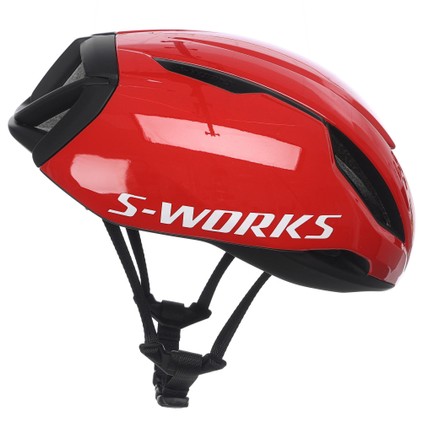
Specialized S-Works Evade 3
“A road-aero helmet with a genuine independent-testing safety pedigree, for triathletes who won’t compromise on protection.”
What we found: Independent wind-tunnel testing shows it running 31.8 seconds faster over an hour at 30km/h and 10 seconds faster at 40km/h versus a baseline road helmet — backed by a 5-star Virginia Tech independent safety rating, the top tier available.
The Good
- 275g with a 9-vent MIPS Air Node design
- 5-star Virginia Tech safety rating — the highest independently awarded tier
- Kammtail aerofoil shape delivers verified aero gains without a closed-back design
Worth Knowing
- Not a closed-back TT shape, so it trails dedicated TT helmets on outright flat-course speed
- Best suited to draft-legal or shorter/hillier courses rather than full-distance flat TT legs

Rudy Project Nytron
“The hot-weather specialist — aero enough to compete, vented enough to survive an August Ironman.”
What we found: Independent wind-tunnel testing placed it third-fastest of the field at 40km/h, while reviewers described it as one of the “most vented and versatile lids” tested — an unusual combination in this category.
The Good
- 268g with 15 exhaust ports for serious heat management
- Meets the WG11 rotational-impact safety standard
- Third-fastest in independent 40km/h wind-tunnel testing among tested competitors
Worth Knowing
- No MIPS — relies solely on the WG11 standard rather than a dual system
- Low-profile shape favors an aggressive position for full aero benefit
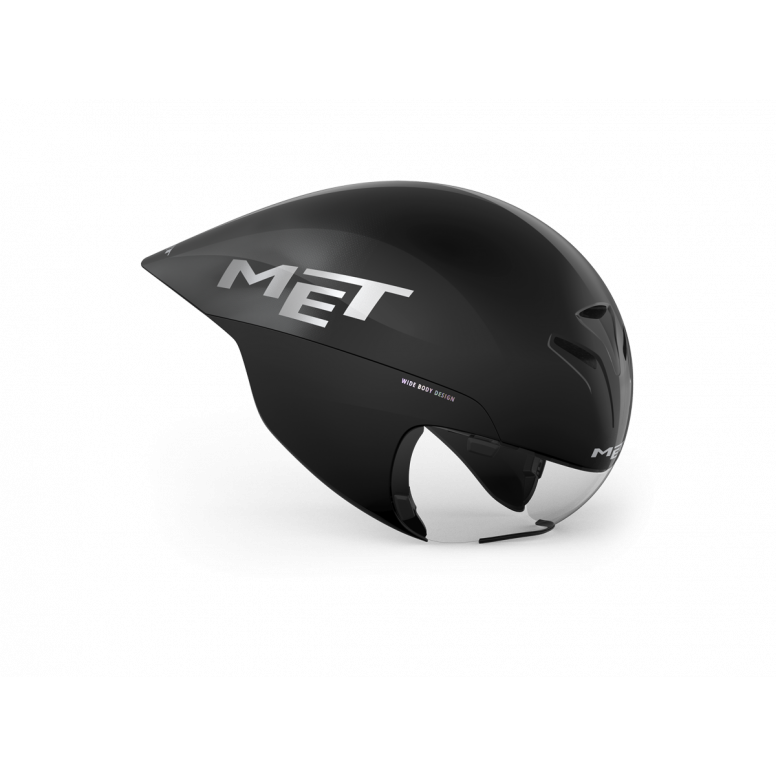
MET Drone Wide Body II
“Built specifically for athletes who’ve struggled to fit a standard closed-back TT helmet.”
What we found: The Triathlete calls it “exceptional value for a full aero TT lid,” describing it plainly as “a genuine closed-back time trial helmet” rather than a road-aero compromise — with its defining feature being a Wide Body shape engineered for broader head-shape compatibility.
The Good
- Wide Body design specifically solves the fit problem that limits other closed-back TT helmets
- Genuine long-tail closed-back TT shape for maximum flat-course aero benefit
- Sizes available for M and L head circumferences
Worth Knowing
- At 430g, on the heavier end of this list, with no visor included and no MIPS
- Retail pricing varied significantly across sources during our research — confirm current price before buying

ABUS GameChanger TT 1.1
“A budget-friendly closed-back TT helmet aimed squarely at long-course comfort.”
What we found: Retailer and manufacturer positioning describes the ABUS Forced Air Cooling and Zoom Ace ventilation systems as built to combine “aggressive aerodynamics with exceptional ventilation” for longer-course comfort — worth noting independent long-form review data specific to this model was limited in our research, so treat these as manufacturer-stated claims rather than independently lab-verified.
The Good
- In-mould construction with a dedicated forced-air cooling system
- Ponytail-compatible design and wheel-dial adjustment
- Available across S, M, L sizing
Worth Knowing
- Independent wind-tunnel or long-form review data for this specific model was limited in our research
- Price varies dramatically by colourway — check the exact variant before buying

Lazer Tardiz 2
“An entry-price club-triathlon helmet bridging road and TT design, currently available at a steep discount off RRP.”
What we found: Manufacturer and retailer information point to Aquavent cooling channels and a TS+ Turnfit adjustment system, with a design aimed at bridging road and TT use for club-level racing — independent lab test data specific to this model was not found in our research, so we’re flagging these as retailer-sourced claims rather than lab-verified.
The Good
- Currently discounted well below its £160 RRP
- Aquavent cooling channels for ventilation
- Magnetic strap closure and CE/CPSC/AS safety certification
Worth Knowing
- Independent wind-tunnel or lab test data for this specific model wasn’t available in our research
- At 372g, it’s heavier than most of the field
Full Comparison Table
| # | Helmet | Price | Weight | Shape | Safety | Best For |
|---|---|---|---|---|---|---|
| 1 | Kask Bambino Pro | £229–£299 | 352g | Short-tail hybrid | — | All-round, sprint to long-course |
| 2 | Van Rysel XCR TT | £50–£80 | — | Closed-back TT | — | Budget closed-back TT |
| 3 | Giro Aerohead II MIPS | £477.87 | 450g | Long-tail closed-back TT | MIPS | Experienced time-trialists |
| 4 | MET Manta MIPS | £141.99 | 251g | Semi-aero | MIPS, 4★ VT | Beginners, lightweight comfort |
| 5 | POC Procen Air | £254.99 | — | Hybrid road/TT | — | Dual-purpose road + TT |
| 6 | Specialized S-Works Evade 3 | £275 | 275g | Road-aero | MIPS, 5★ VT | Draft-legal / shorter courses |
| 7 | Rudy Project Nytron | £153 | 268g | Low-profile road-aero | WG11 | Hot-weather racing |
| 8 | MET Drone Wide Body II | £315.99–£382.49 | 430g | Closed-back TT, wide fit | — | Wider head shapes |
| 9 | ABUS GameChanger TT 1.1 | from £118.41 | — | Closed-back TT | — | Budget long-course comfort |
| 10 | Lazer Tardiz 2 | £60 (sale) | 372g | Hybrid road/TT | CE/CPSC/AS | Entry-level club triathlon |
Fields marked “—” reflect specs not published by the manufacturer/retailer at time of research — confirm directly before purchase if this factor matters to you.
Frequently Asked Questions
Do triathlon aero helmets actually make you faster?
Yes — independent wind-tunnel testing on several models in this roundup showed measurable time savings (10–30+ seconds over an hour at race-relevant speeds) versus a standard road helmet. The gain varies by model and depends heavily on holding a stable aero position.
Is a closed-back TT helmet worth it for a sprint or Olympic-distance triathlon?
For shorter races, a road-aero-style helmet (like the Specialized S-Works Evade 3 or Rudy Project Nytron) often makes more sense — you get most of the aero benefit with far better ventilation and a more forgiving fit if your position shifts during a faster, punchier effort.
What’s the difference between a TT helmet and an aero road helmet?
A true TT helmet has a closed-back, elongated tail shape designed for maximum aero benefit in one fixed, aggressive position. An aero road helmet keeps more ventilation and a rounder shape, trading a little outright speed for comfort and versatility.
How much time can a good aero helmet save over an Ironman bike leg?
Independent testing referenced in this roundup shows time savings in the range of roughly 10–30 seconds per hour at common race speeds versus a baseline road helmet — over a 5–6 hour Ironman bike leg, that compounds meaningfully, though exact gains depend on your position and the specific helmet.
Do I need a different helmet for the swim-to-bike transition vs. the run?
No — you wear the same helmet for the entire bike leg. What matters for transition speed is how quickly you can put the helmet on and secure the visor or strap, which is why fiddly visor systems are worth testing before race day.
Are TT helmets safe — do they have the same safety ratings as road helmets?
Not all TT helmets in this roundup carry an independent safety rating like MIPS or a Virginia Tech STAR score — check the comparison table above before assuming. Several road-aero-style helmets in this list (like the Specialized S-Works Evade 3) carry the strongest independently verified safety ratings.
What’s the best triathlon helmet for hot-weather racing?
The Rudy Project Nytron stood out in independent testing for combining strong ventilation (15 exhaust ports) with still-competitive aero numbers — a solid pick for summer long-course racing.
Can I wear a TT helmet if I have a wider or rounder head shape?
Fit varies significantly between models. The MET Drone Wide Body II was specifically engineered for broader head-shape compatibility, while reviewers note the budget-friendly Van Rysel XCR TT “suits fewer head shapes than pricier options.”
Is MIPS necessary in a triathlon aero helmet?
Not every helmet in this category includes MIPS, and not every model needs to — several rely on alternative rotational-impact standards like WG11. If independent safety rating is a priority, check the comparison table for which specific system each helmet uses.
How do I know if a TT helmet fits me before buying it?
Try it on in person where possible, especially for closed-back TT shapes, since independent reviewers consistently flag fit as the biggest variable between models — even within the same price bracket.
What’s the best budget aero helmet for triathlon beginners?
The MET Manta MIPS is the strongest beginner pick in this roundup — independently tested faster than a baseline helmet, under £150, and light enough (251g) to be comfortable on your first long training rides.
Do aero helmets work with sunglasses or do I need the helmet’s own visor?
Some models (like the POC Procen Air and Giro Aerohead II) include an integrated visor/lens system built for the helmet’s specific shape, while road-aero-style helmets are generally designed to work with your existing sunglasses — check individual product specs before assuming compatibility.
Ready to Gear Up for Race Day?
Your fastest bike leg starts with the Kask Bambino Pro
It’s the most versatile, best-reviewed aero helmet in this entire roundup — the one pick that works whether you’re racing a sprint or a full-distance event.
Want more gear breakdowns before race season?
Join The Daily Split — our free newsletter covering triathlon gear, training, and race-day strategy, straight to your inbox.
Ready to build out your full race-day kit?
Browse the complete Enduradex gear directory for wetsuits, bikes, nutrition, and everything else on your checklist.